
What customers need before they decide
Jamr Al-Oud is a Dubai fragrance house offering French and Oriental fragrances, along with oud oil, incense, hair perfumes, body oils and gift boxes. The store serves customers in the UAE and the Gulf buying fragrances for themselves or as gifts in luxury packaging.
Perfume ecommerce website design has to help people choose a scent they cannot test through the screen. Product type, intended use and gifting can provide useful browsing routes across a large range. A customer looking for oud oil needs a different starting point from someone comparing gift boxes. We plan the collections menu around those distinctions and agree what product descriptions need to explain. Multiple markets also introduce currency and delivery questions. Certificate displays and fragrance performance statements need supporting information before they become sales claims; their presence on a page does not independently verify them.
How Jamr Al-Oud organizes the journey
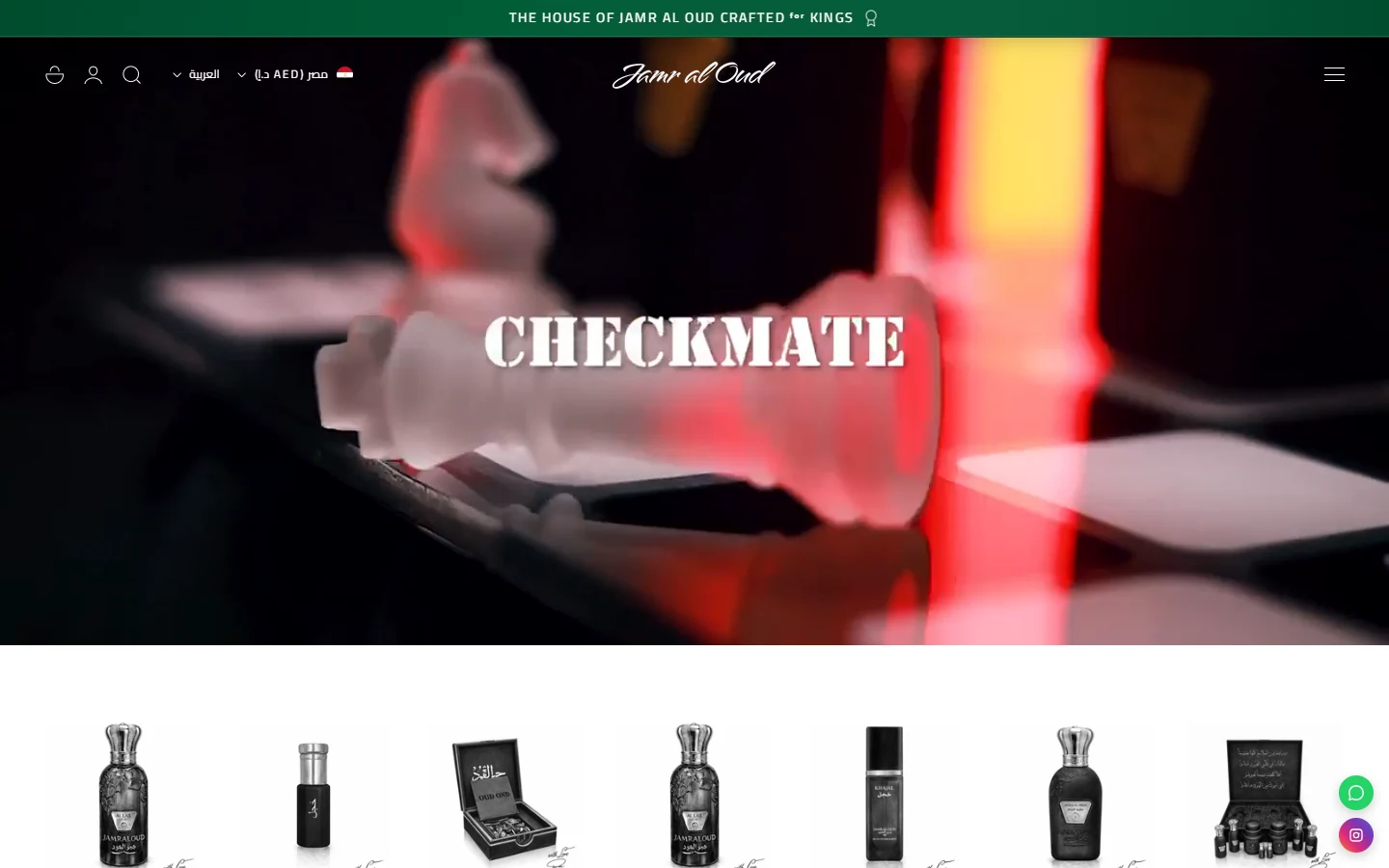
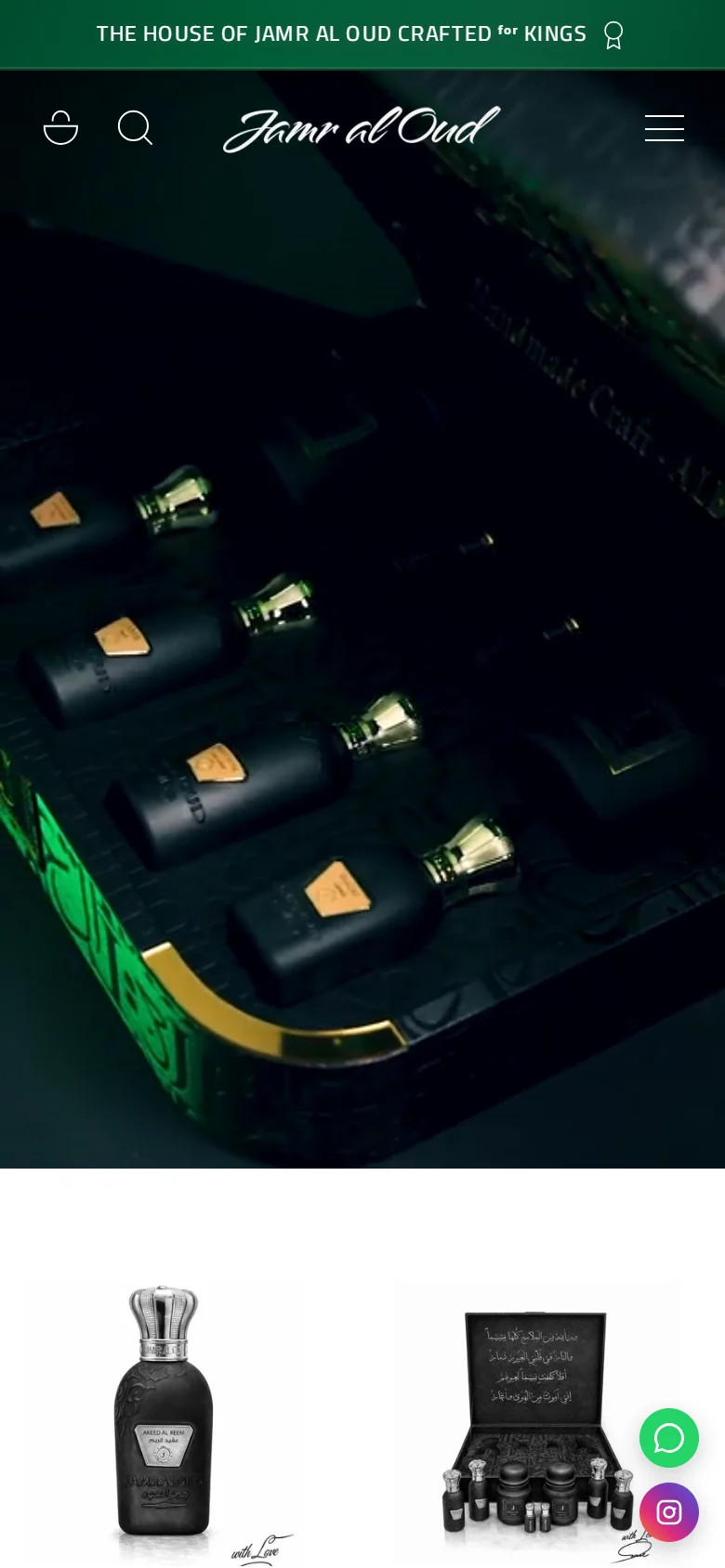
- A top bar reading “The House of Jamr Al Oud Crafted for Kings”, a video hero section and a product row directly underneath.
- An expanded collections menu includes all perfumes, the kings’ wardrobe, most popular, royal incense, alcohol-free hair perfumes, pure oud oil and royal box selections, alongside separate fragrance pages.
- “Discover your fragrance”, “Create your own box” and “Bestsellers” sections.
- An ISO quality certificates section, customer reviews, an Instagram feed, and floating WhatsApp and Instagram buttons.
The expanded menu separates perfumes, incense, oud oil and gift selections. Discovery sections provide entry points for visitors who do not know a fragrance name. For your store, define each collection and test finding an item through the mobile menu. Review the effect of country and currency choices on ordering information, and assign responsibility for maintaining any published certificates and reviews.
Prepare your brief and work with our team
For a business in the same industry, use this checklist to define content and operations before requesting a proposal. Discuss each item with the person responsible and collect approved information in a working brief.
- Group the catalog by product type and use, then review categories with the product team.
- Prepare factual descriptions, sizes and the contents of each available gift selection.
- Confirm countries, currencies and delivery arrangements before adding market selectors.
- Request records for displayed certificates and test browsing through a sample checkout.
We start with your business and the inquiry or purchase you want to receive, then define pages, content and functions in a written proposal. Our team agrees who supplies and approves the copy and images, shares work for review, and checks the mobile journey within the agreed scope. We record feedback before handover approval and explain the access or usage guidance included. Ongoing maintenance and support are discussed as part of the scope, so you can assess the deliverables and the responsibilities your business will take on after launch.
Explore our online store design service, then send your project details so we can agree the scope.
Frequently asked questions
How should a large perfume catalog be organized?
Start with product types and uses, then add collections that help customers choose. Test finding a known product through the mobile menu.
When are country and currency selectors useful?
Use them for supported markets when they reflect maintained pricing and delivery arrangements. Define their actual effect before implementation.
How should certificates appear in the store?
Publish only verifiable certificate information with accurate scope. A certificate section in a previous project does not validate its claims for another business.
What you can take from it for a similar project
- Perfume, incense and oud categories give a varied catalog several understandable browsing routes.
- Discovery sections serve visitors who do not arrive with a particular fragrance name in mind.
- Gift selections need clear contents so customers can compare a box with separate products.
- Market selection introduces ordering information that the store must approve and keep current.