
What customers need before they decide
Stone Cast is a finishing and interior fit-out contractor in Riyadh, working on GRC facades, GRG and GRP works, cladding, gypsum and epoxy, with its own factory producing these elements. The website targets property developers and villa and building owners, showing coverage in cities including Riyadh, Jeddah, Dhahran, Al-Khobar, Madinah, Al-Qassim, Jazan and Makkah.
Facade contractor website design has to serve both technical buyers and owners who know the appearance they want but not the material name. Pages for GRC, GRG and other systems should explain the scope and show relevant examples without replacing project-specific specifications. Manufacturing information can support a capability assessment when it describes what the factory actually produces. We connect those explanations to the quote route, so the buyer can identify a service before sending drawings or measurements. A specialist contractor’s catalog needs a different structure from a general residential finishing site.
How Stone Cast organizes the journey
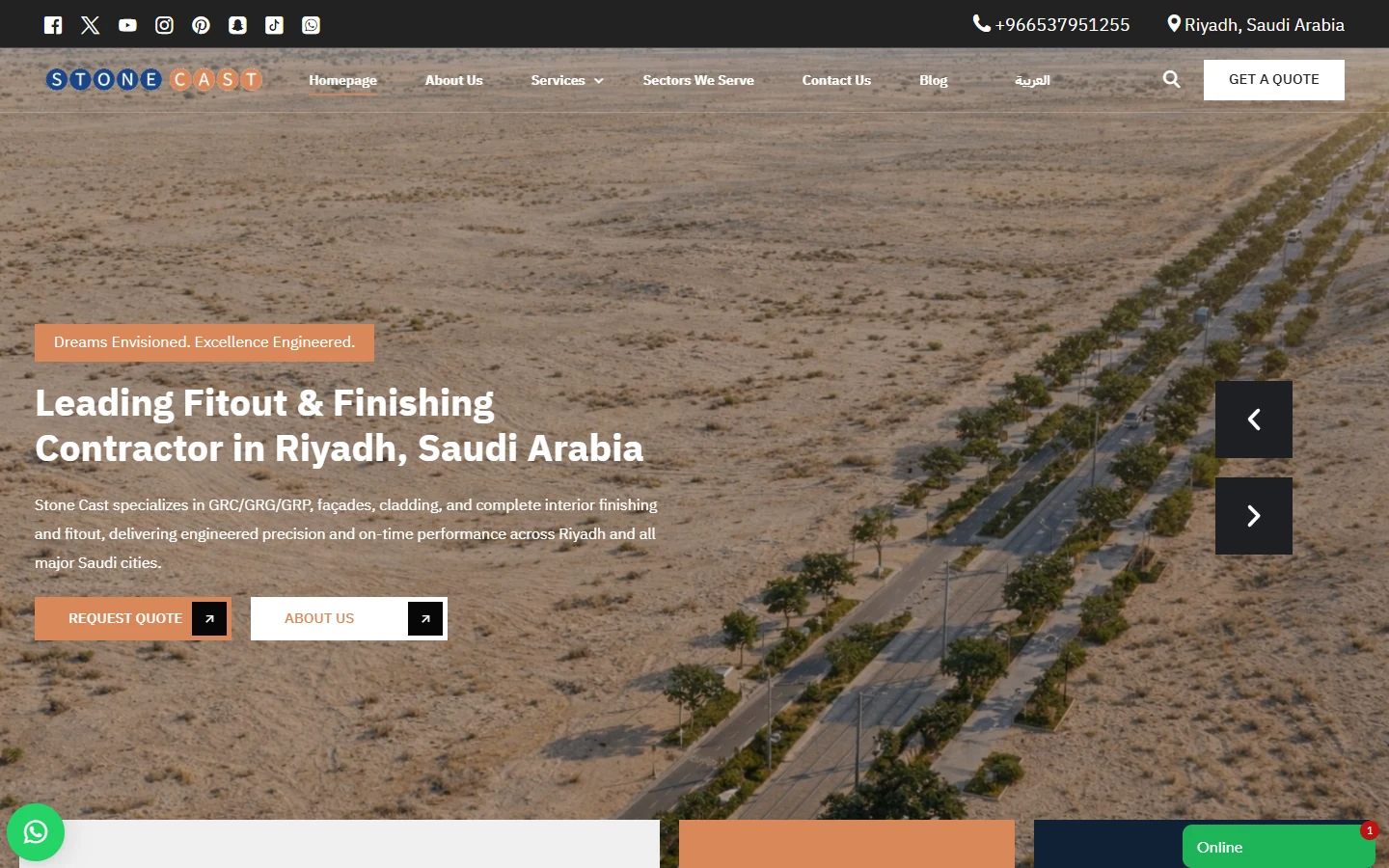
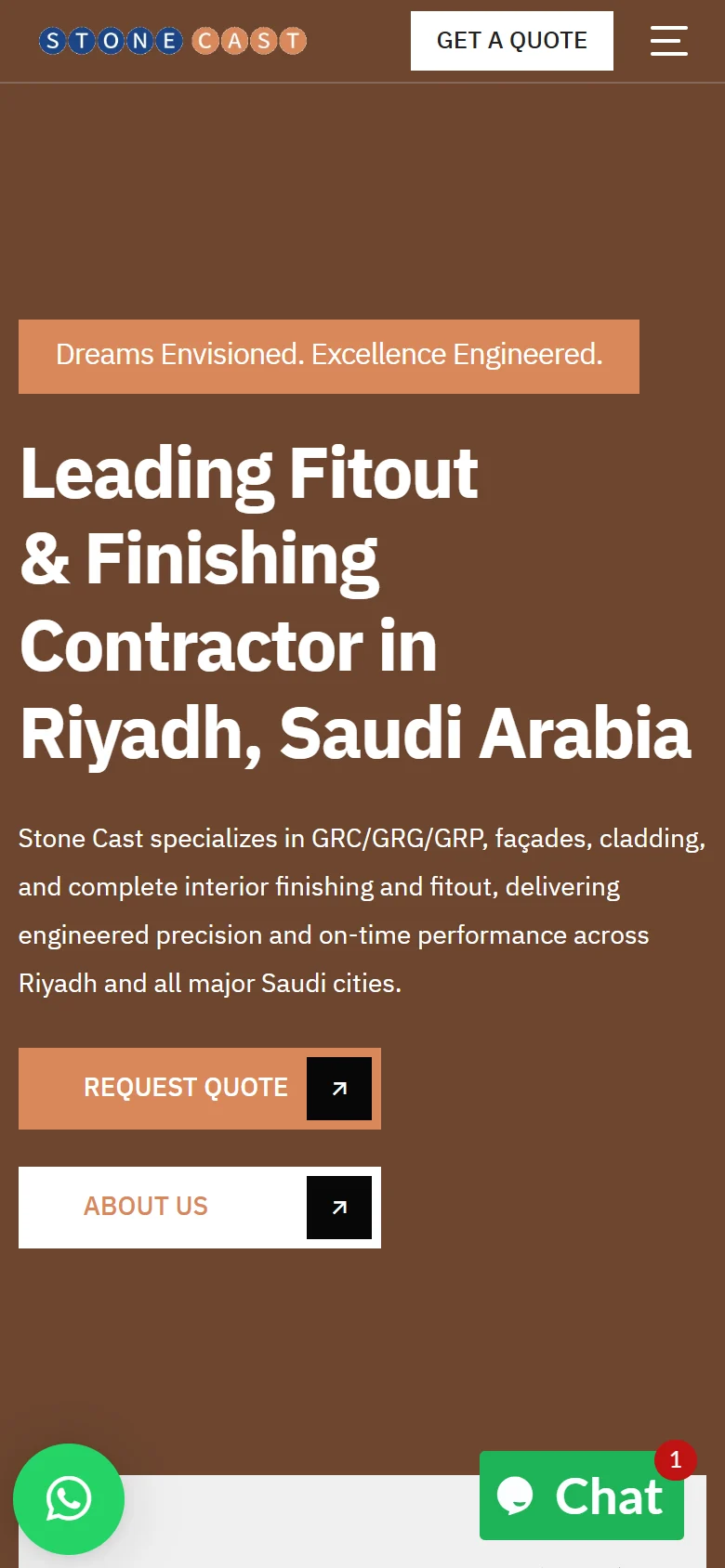
- A header with a top bar for the phone number, location and social links, plus a fixed “Get a Quote” button.
- A hero slider with three slides, each carrying a message: interior finishing, GRC facades and engineering precision.
- A services dropdown: GRC, GRG and GRP, finishing and renovation, gypsum, and epoxy, alongside a page for the sectors served.
- A factory capabilities section and an “Our Process” section with four stages: planning, design, execution and handover.
- Customer reviews, a blog, a quote request form and a WhatsApp button.
The technical menu serves buyers who know a system name, while the sectors page adds project context. Factory and process sections explain different aspects of capability. For your site, connect each specialty to relevant examples and agree the information estimators need from an owner. Test long material names and menu branches on mobile, then send an inquiry about a specific service.
Prepare your brief and work with our team
For a business in the same industry, use this checklist to define content and operations before requesting a proposal. Discuss each item with the person responsible and collect approved information in a working brief.
- List delivered systems and distinguish in-house manufacturing from externally supplied work.
- Prepare approved service explanations and permitted photos without adding unverified specifications.
- Confirm service areas and permission to publish the selected project examples.
- Agree the information needed for estimating, including whether file uploads belong in scope.
We start with your business and the inquiry or purchase you want to receive, then define pages, content and functions in a written proposal. Our team agrees who supplies and approves the copy and images, shares work for review, and checks the mobile journey within the agreed scope. We record feedback before handover approval and explain the access or usage guidance included. Ongoing maintenance and support are discussed as part of the scope, so you can assess the deliverables and the responsibilities your business will take on after launch.
Explore our website design service, then send your project details so we can agree the scope.
Frequently asked questions
How can material pages help nontechnical buyers?
Connect each system name to its uses, service scope and approved examples. Project-specific engineering decisions still need the responsible specialist.
What should a factory section contain?
Use approved photographs and factual descriptions of products and capabilities. Do not add production capacity or certifications without supporting records.
Should buyers upload drawings?
Include uploads if the estimating workflow requires them. Agree file types, handling and responsibility for reviewing submissions as part of the scope.
What you can take from it for a similar project
- Named systems give technical buyers a direct entry into a service they already recognize.
- Use descriptions help owners who know the desired outcome but not the material terminology.
- Factory information and delivery stages answer different questions when a buyer assesses capabilities.
- A quote request has clearer context when it follows a description of the selected service scope.